Read The Evidence · PDF Example
Roof Repairability
Real roof and solar evidence showing why access, materials, and connected assemblies belong in a repair plan. Customer names and exact property addresses are removed from the public example.
Read The Evidence · PDF Example
Real roof and solar evidence showing why access, materials, and connected assemblies belong in a repair plan. Customer names and exact property addresses are removed from the public example.
CRS / Roof Repairability Analysis
See the markings. Follow the test.
Understand what the work actually disturbs.
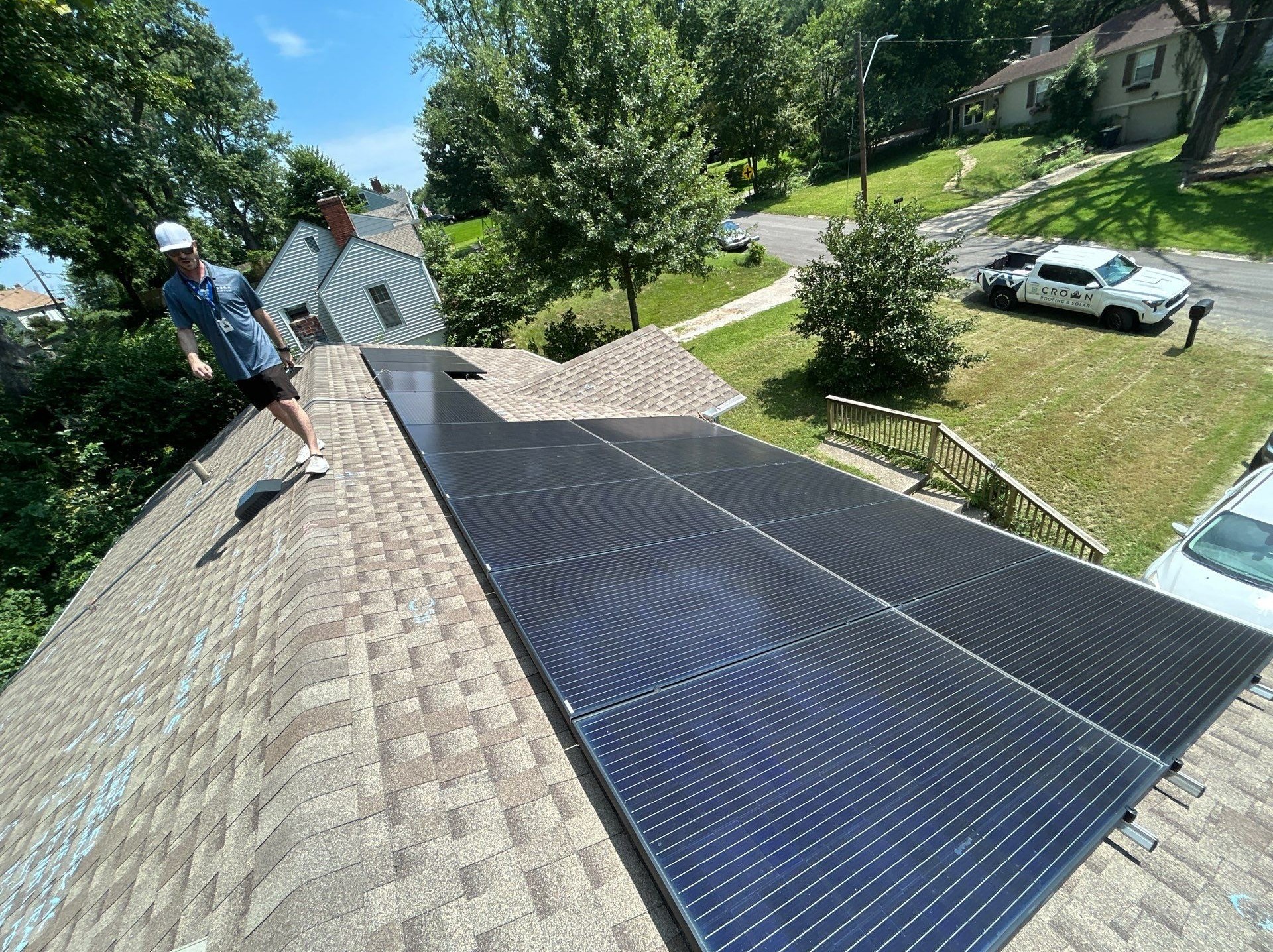
01 / Kansas City roof + solar inspection
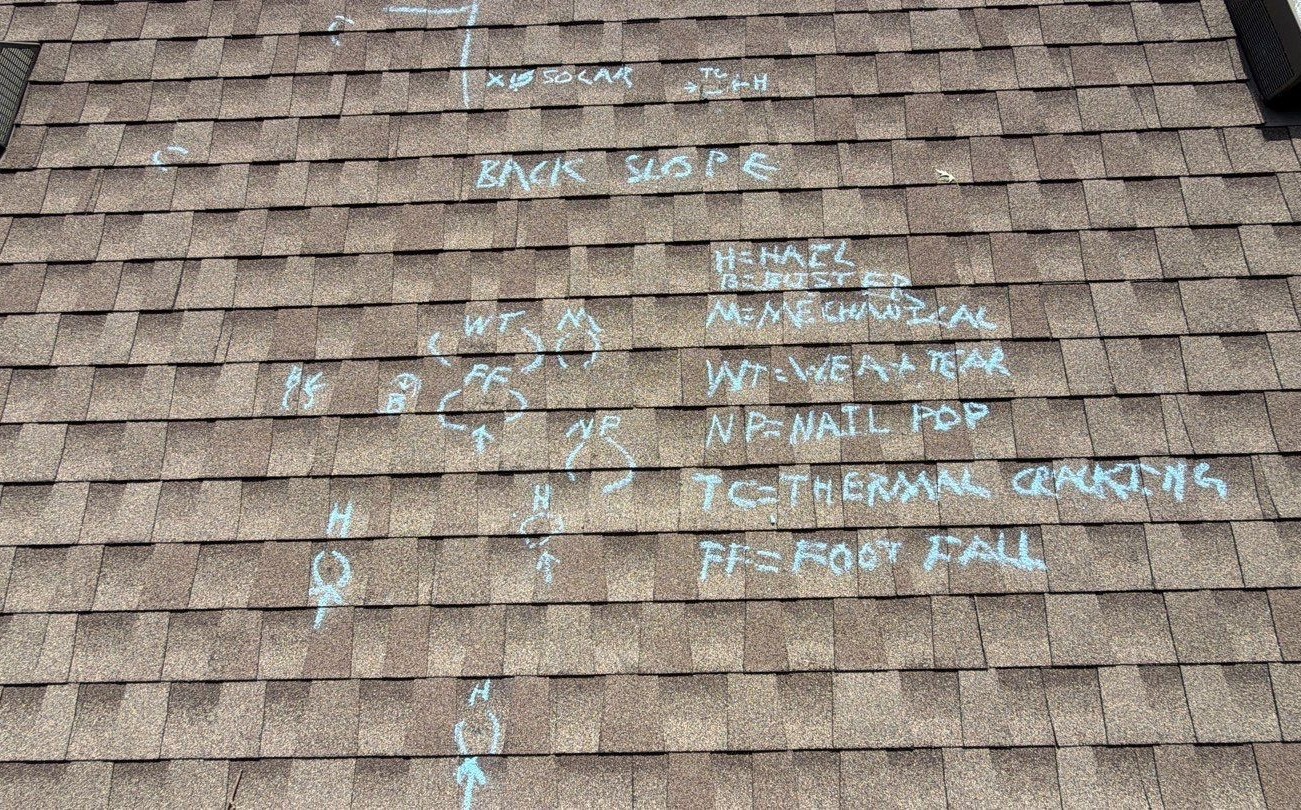
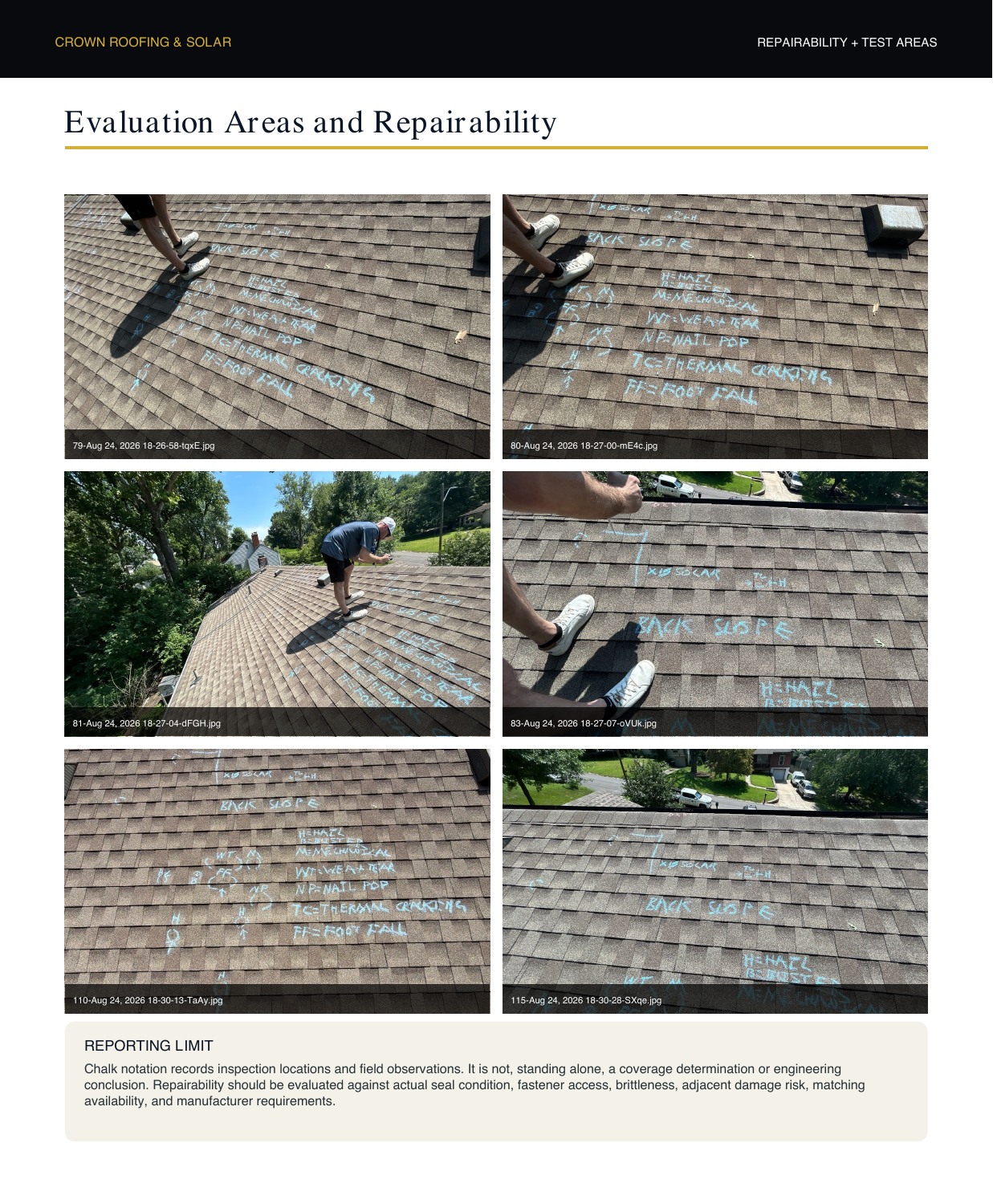
A useful inspection separates the conditions it finds. The original roof legend records seven categories, so the reviewer can distinguish the inspector’s observations instead of treating every mark as the same kind of damage.
 Open full image ↗
Source: Crown’s Current Condition & Claim-Readiness Report — Roofing + Solar System, August 24, 2026. Photographs extracted from the report without changing the markings.
Read the field legend
The inspector’s hail classification. Correlate the marked location with close-range material condition, other roof observations and the event record.
Examine the original photograph ↗The inspector distinguishes blistering from other marked conditions. Preserve that distinction when comparing the evidence.
Examine the original photograph ↗A separately recorded mechanical condition. Its mark is not interchangeable with a hail classification.
Examine the original photograph ↗Background aging and wear belong in the record, alongside the conditions being investigated.
Examine the original photograph ↗The marked fastener-related condition is documented separately from the other field categories.
Examine the original photograph ↗This is the wording recorded in the original chalk legend. The legend alone does not establish a cause or a date.
Examine the original photograph ↗The inspector’s separate foot-fall notation keeps traffic-related observations visible in the review.
Examine the original photograph ↗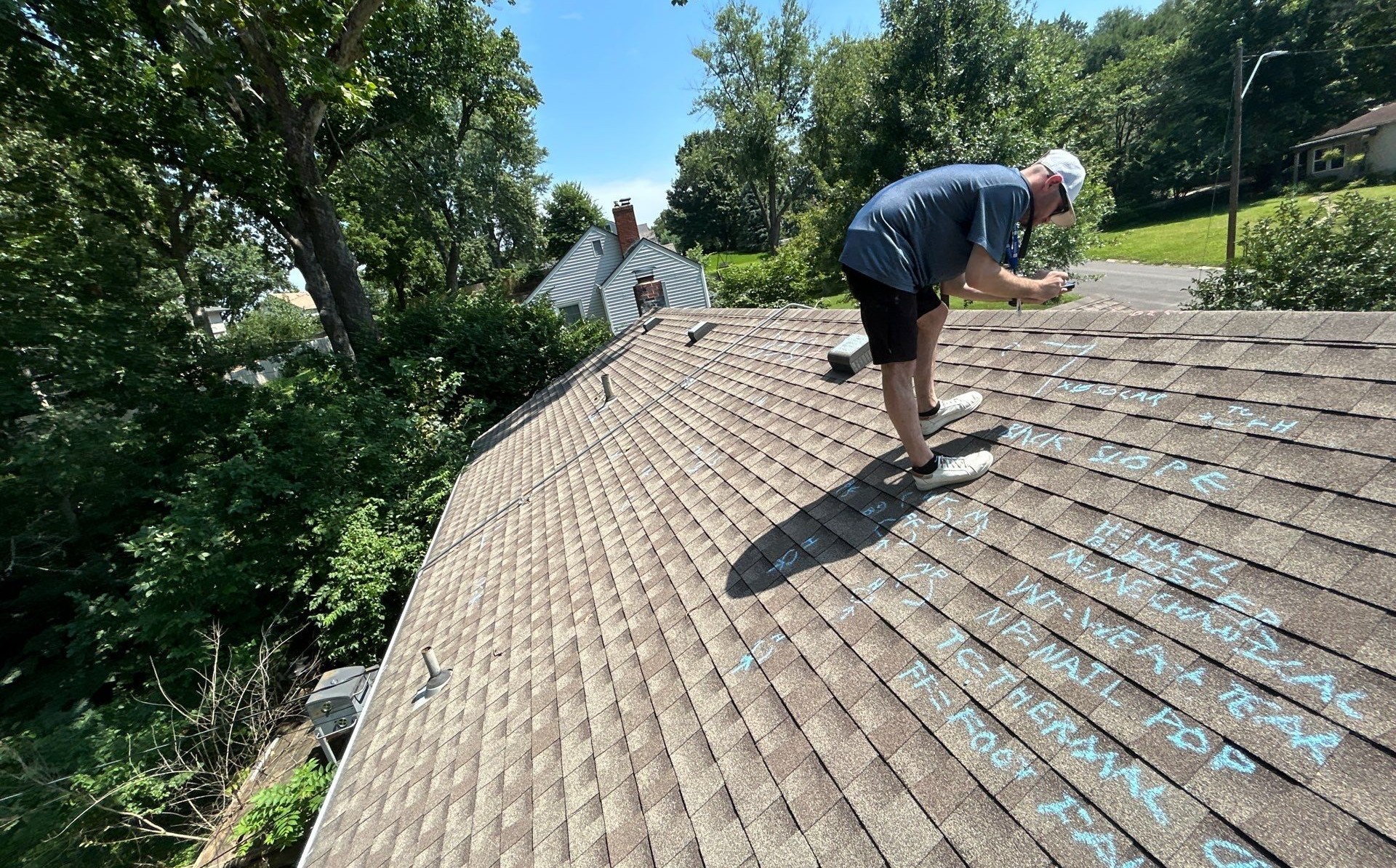 Open full image ↗
 Open full image ↗
The Work / Actual Crown Field Recordings
A repair starts at one component. Access can involve the materials around it. These short excerpts let you see the work, then return to the photographs and report that explain the findings.
Field Case 01 · April 24, 2026 · 75 Seconds
A chalk-marked assessment area surrounds the pipe flashing. Watch the tool access and lifting of the neighboring shingle course as the inspector works around the component.
Source R1, 03:00–04:15 from the original 5:00 recording. This is one continuous interval at normal speed. Audio is omitted; the original recording is retained in the project file. No generated imagery or replacement markings.
Field Case 02 · Wichita, Kansas · 90 Seconds
A close view shows tool placement beneath the marked shingles and lifting next to the box vent. Compare this sequence with the later condition frames in the evidence index below.
Source V4, July 31, 2026, 01:00–02:30 from the original 4:55.60 recording. This is one continuous interval at normal speed. Audio is omitted; the original recording is retained in the project file. No generated imagery or replacement markings.
Field Case 02 · Wichita, Kansas · 75 Seconds
The camera follows the marked roof across the hip and valley area. The wider view establishes how the roof planes meet; the investigation must also establish the concealed assembly and repair access.
Source V2, July 31, 2026, 07:05–08:20 from the original 8:26.25 walkthrough. This is one continuous interval at normal speed. Audio is omitted; the original recording is retained in the project file. No generated imagery or replacement markings.
These are selected visual excerpts, not complete tests or stand-alone pass/fail determinations. Public case labels omit homeowner identifiers. Full findings require the before-and-after record, test conditions, source footage and report.
Field Case 03 / Peck, Kansas · June 12, 2026
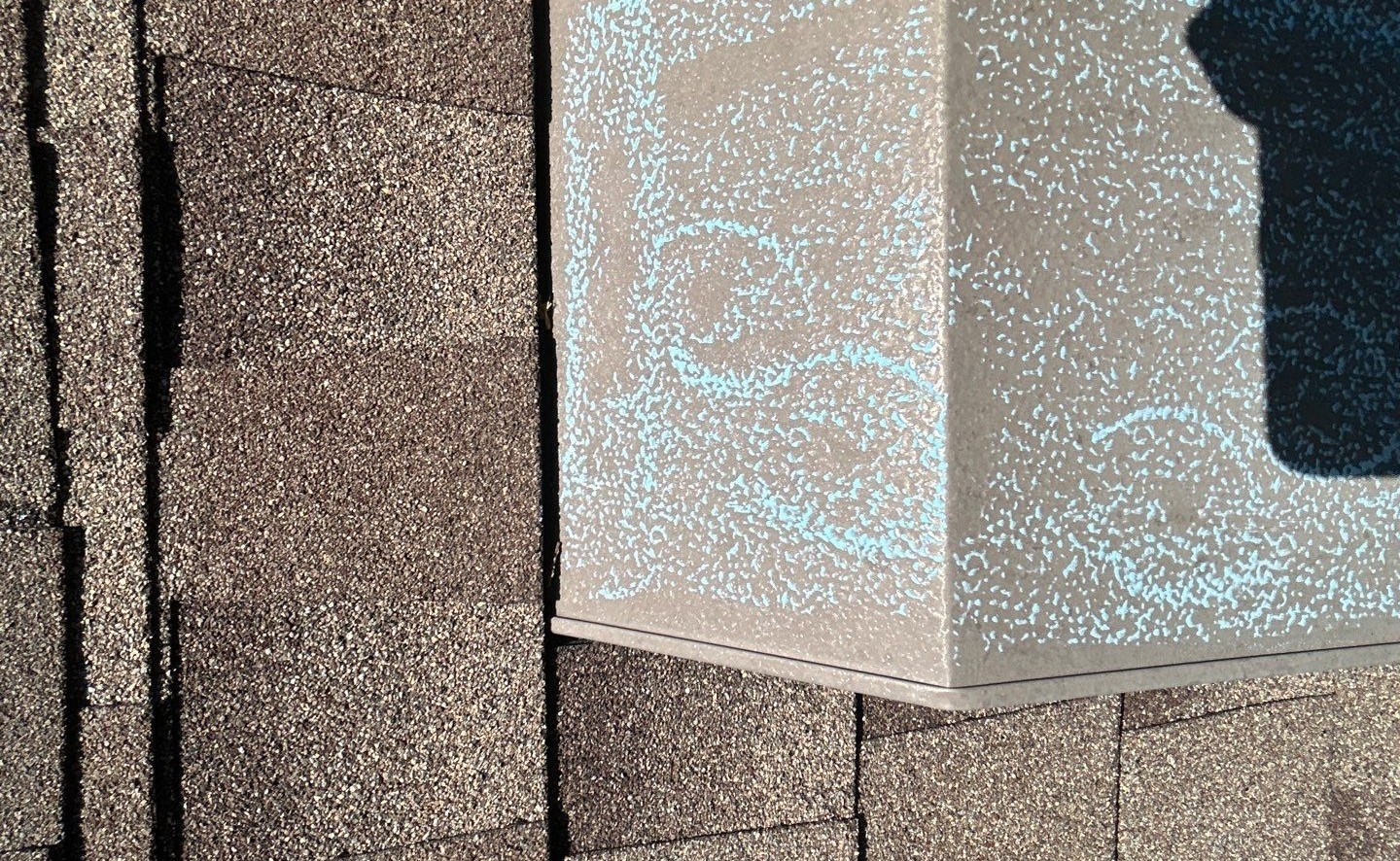
A useful test square connects a wider location view to individual observations. These original Crown photographs preserve the inspector’s chalk marks and the roof-and-solar context.
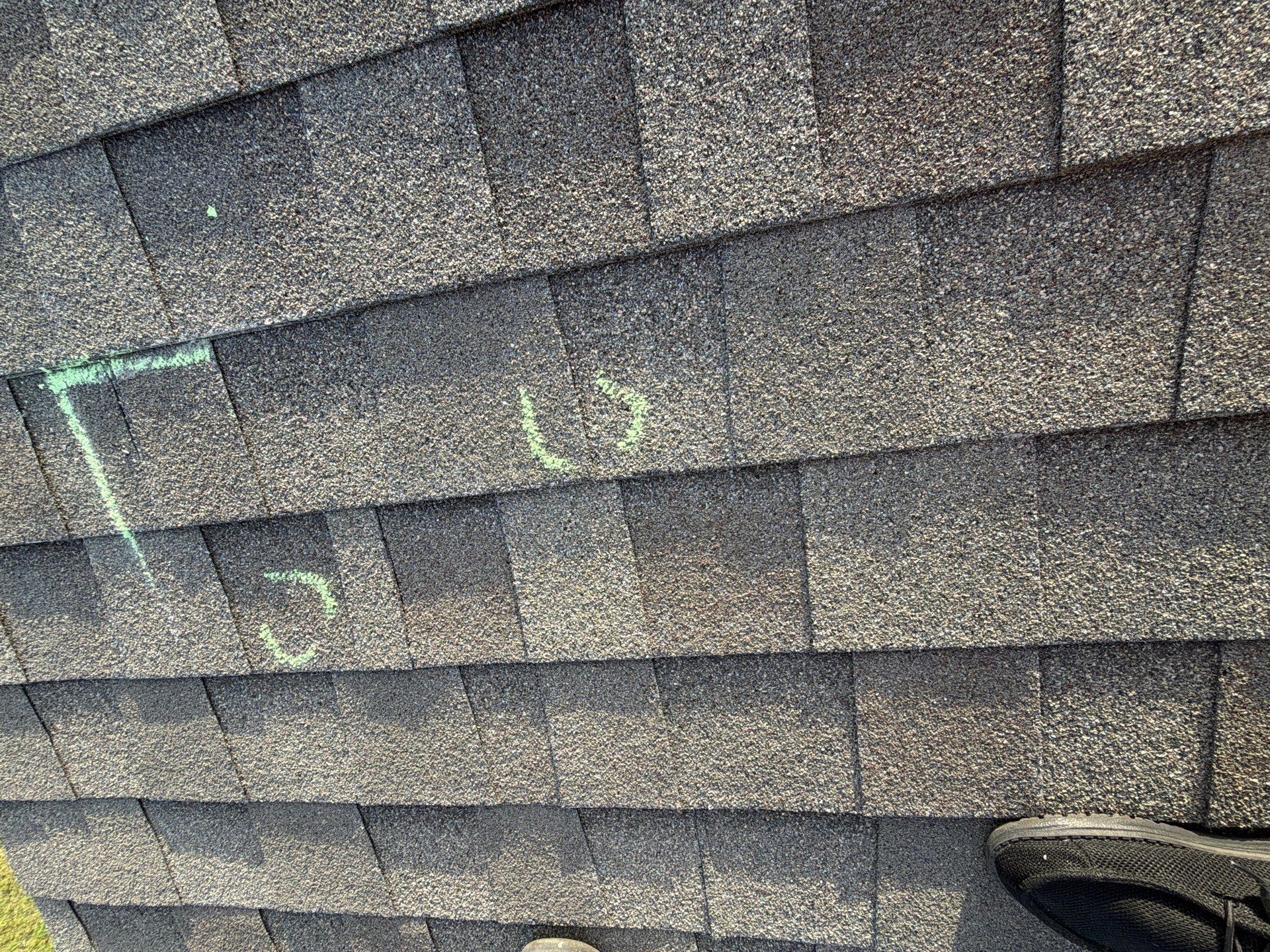
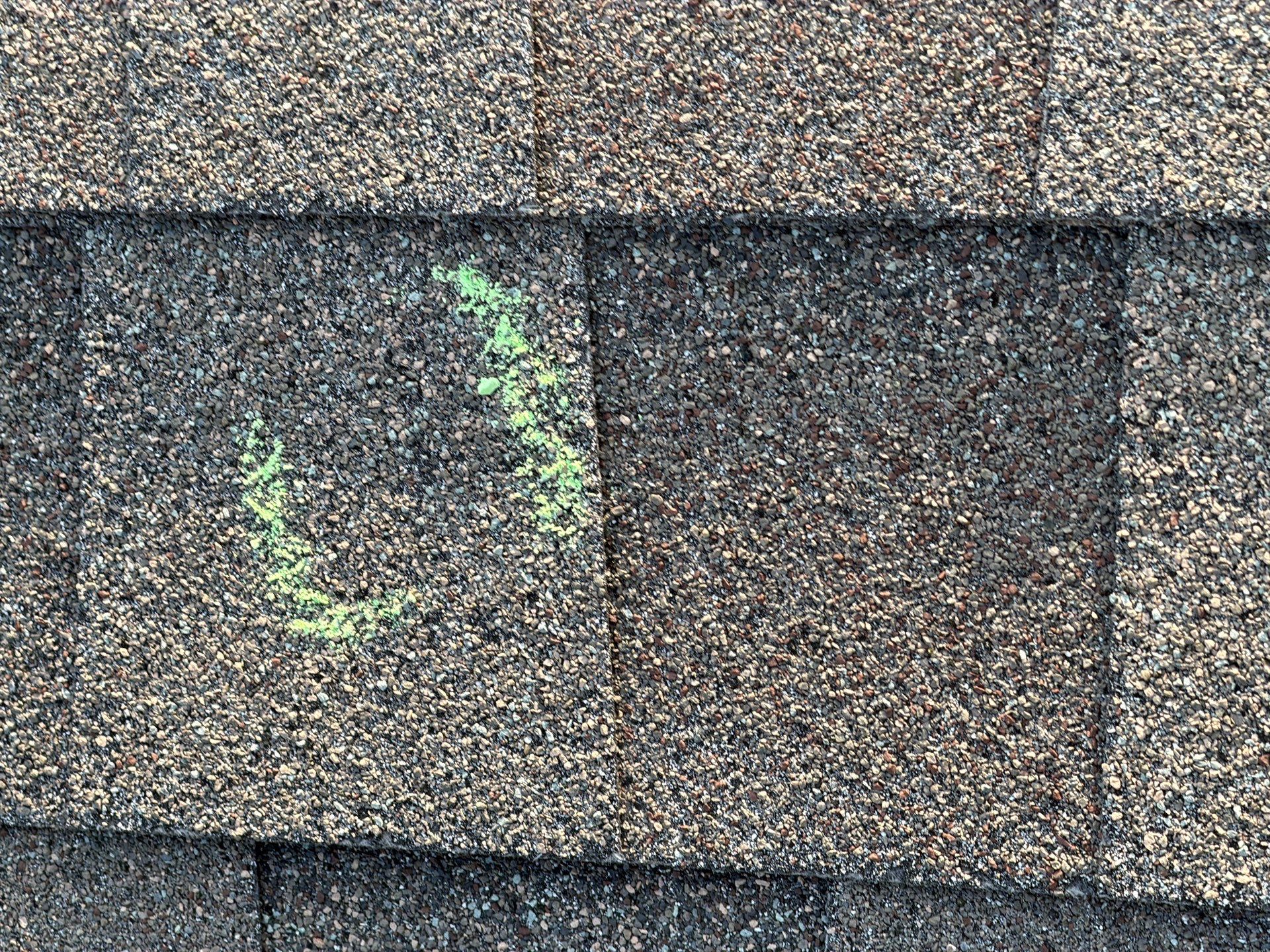
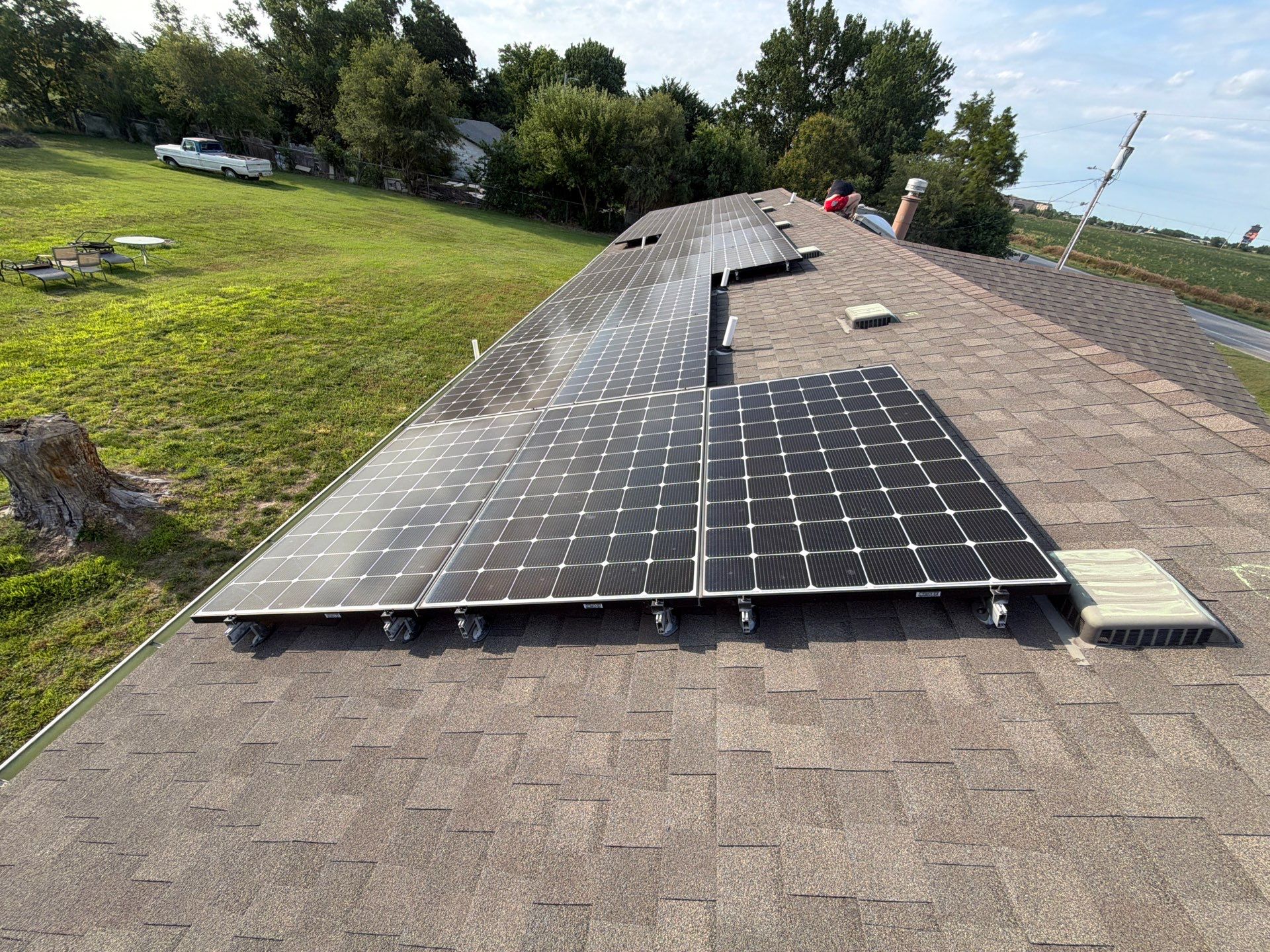
Source: Crown’s CompanyCam project and roof-damage photo report. Original inspection photography; metadata omitted from public copies. A chalk mark identifies an observation for review; condition, cause and timing still need supporting evidence.
02 / A separate Crown case · Wichita, Kansas
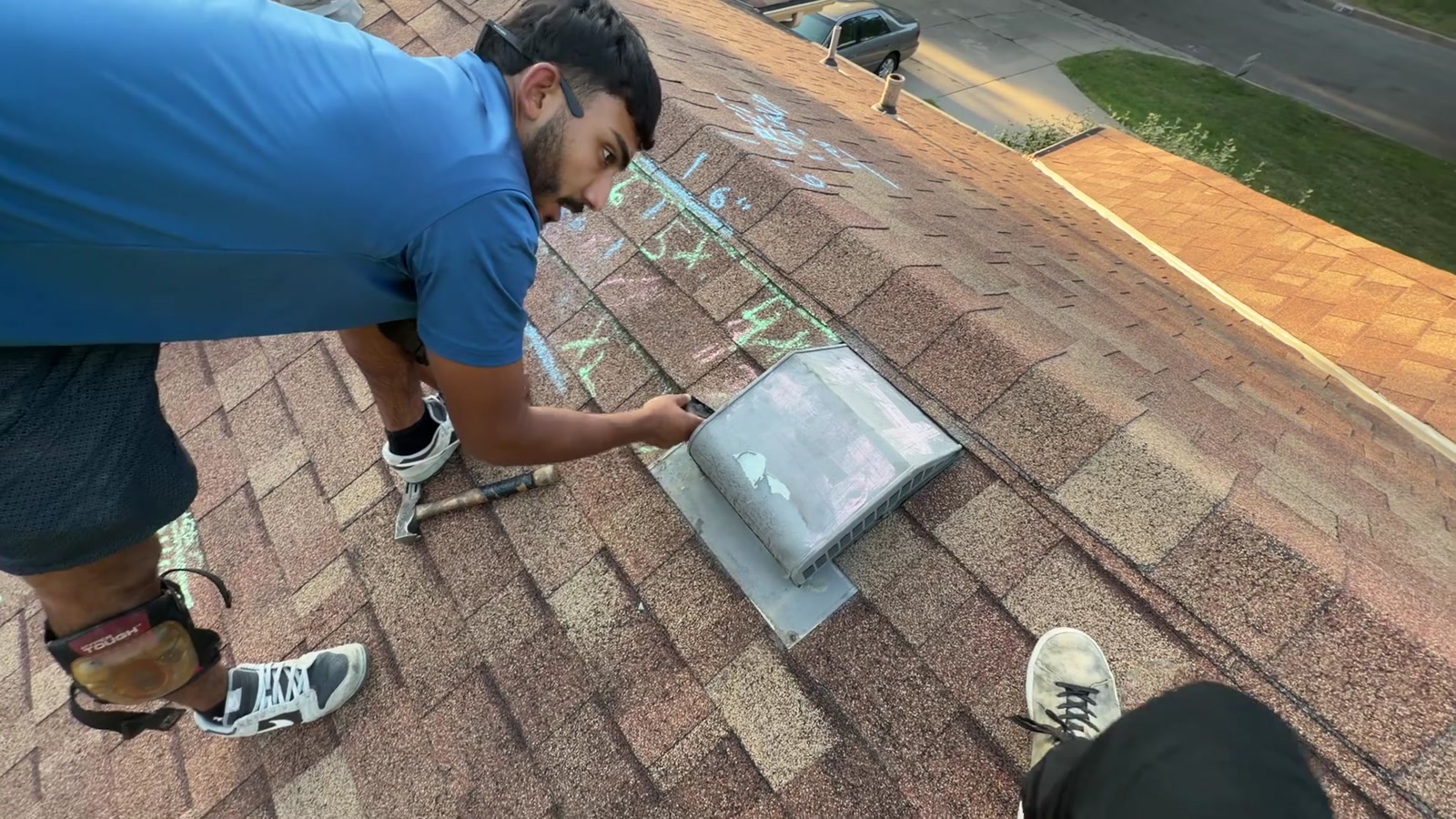
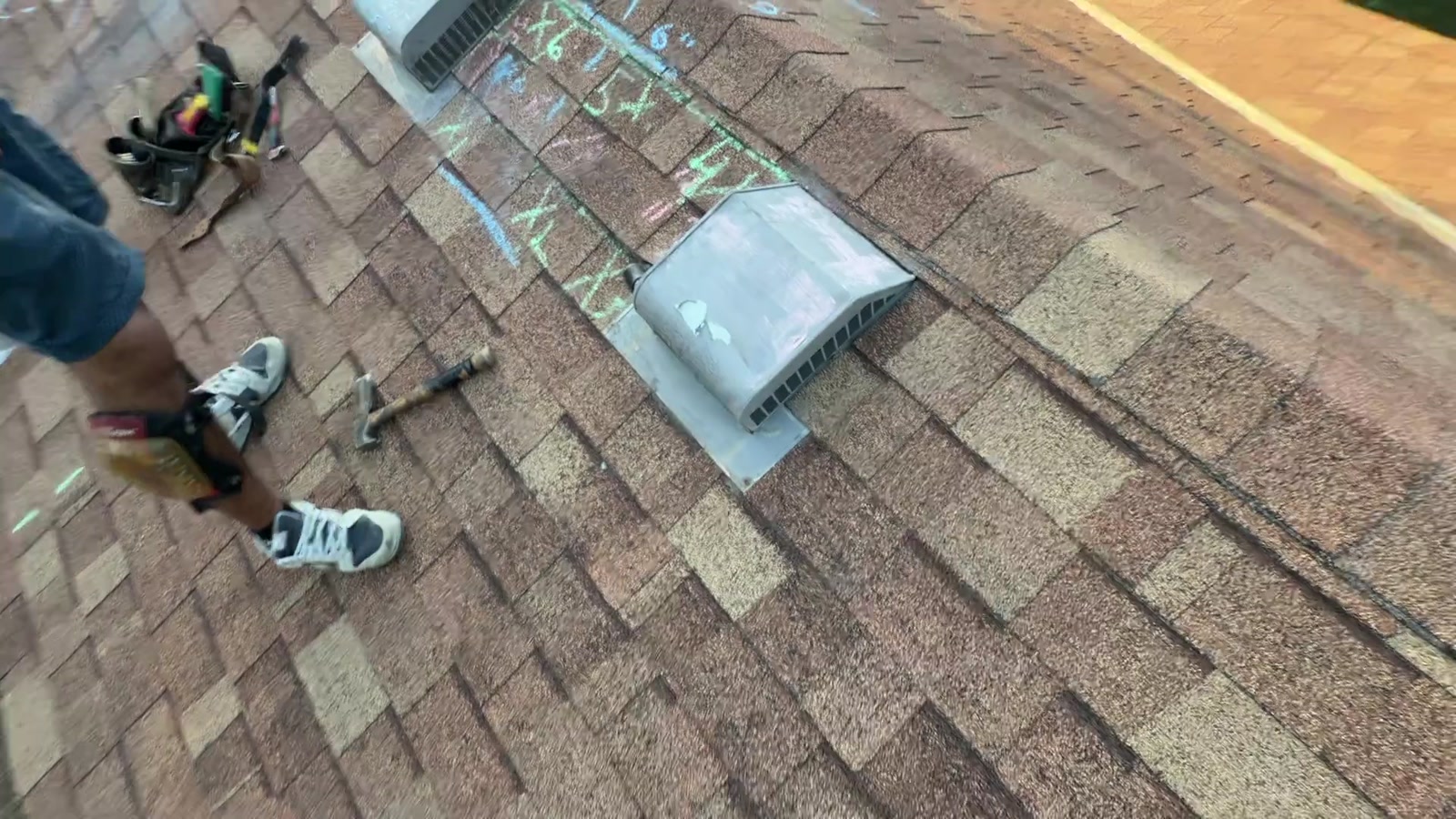
These are actual timestamped frames from one repairability video. Follow access around a box vent, the lifting of an adjacent shingle course and the resulting test-area condition.
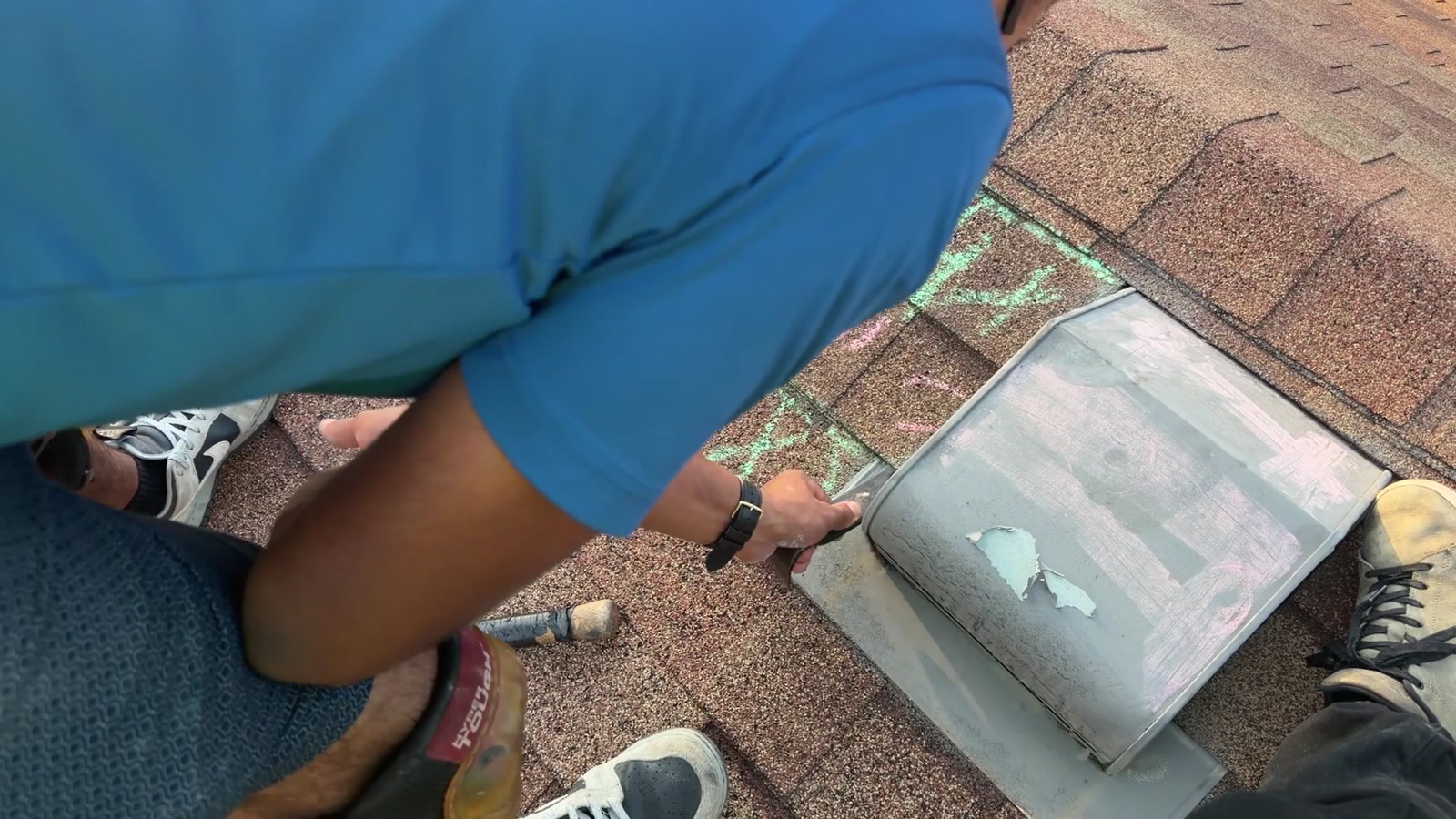 Open full image ↗
Document the starting condition and the access point next to the box vent.
 Open full image ↗
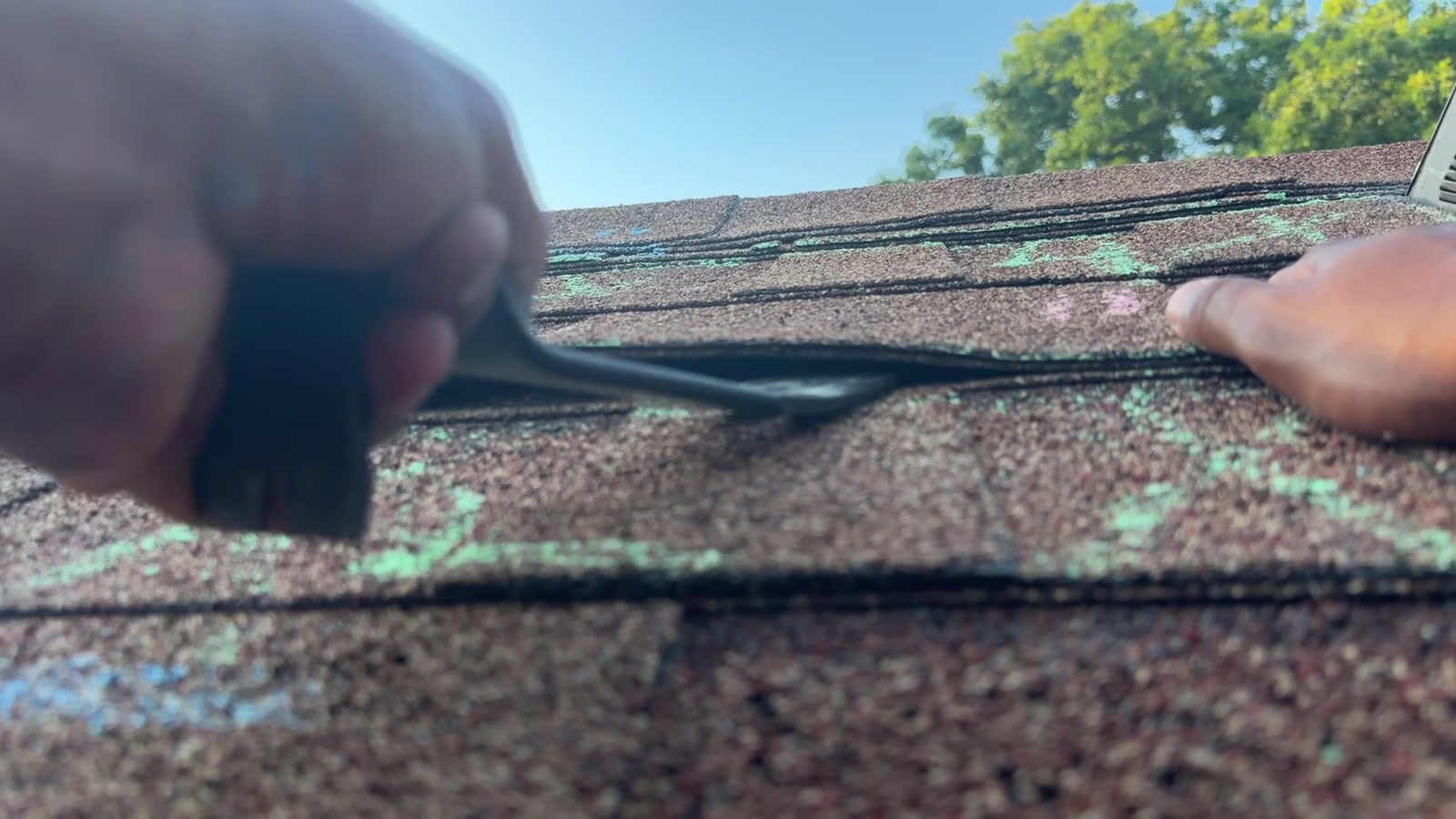
The close view records the material being flexed to create access.
 Open full image ↗
Follow the manipulated area and its neighboring course through the sequence.
 Open full image ↗
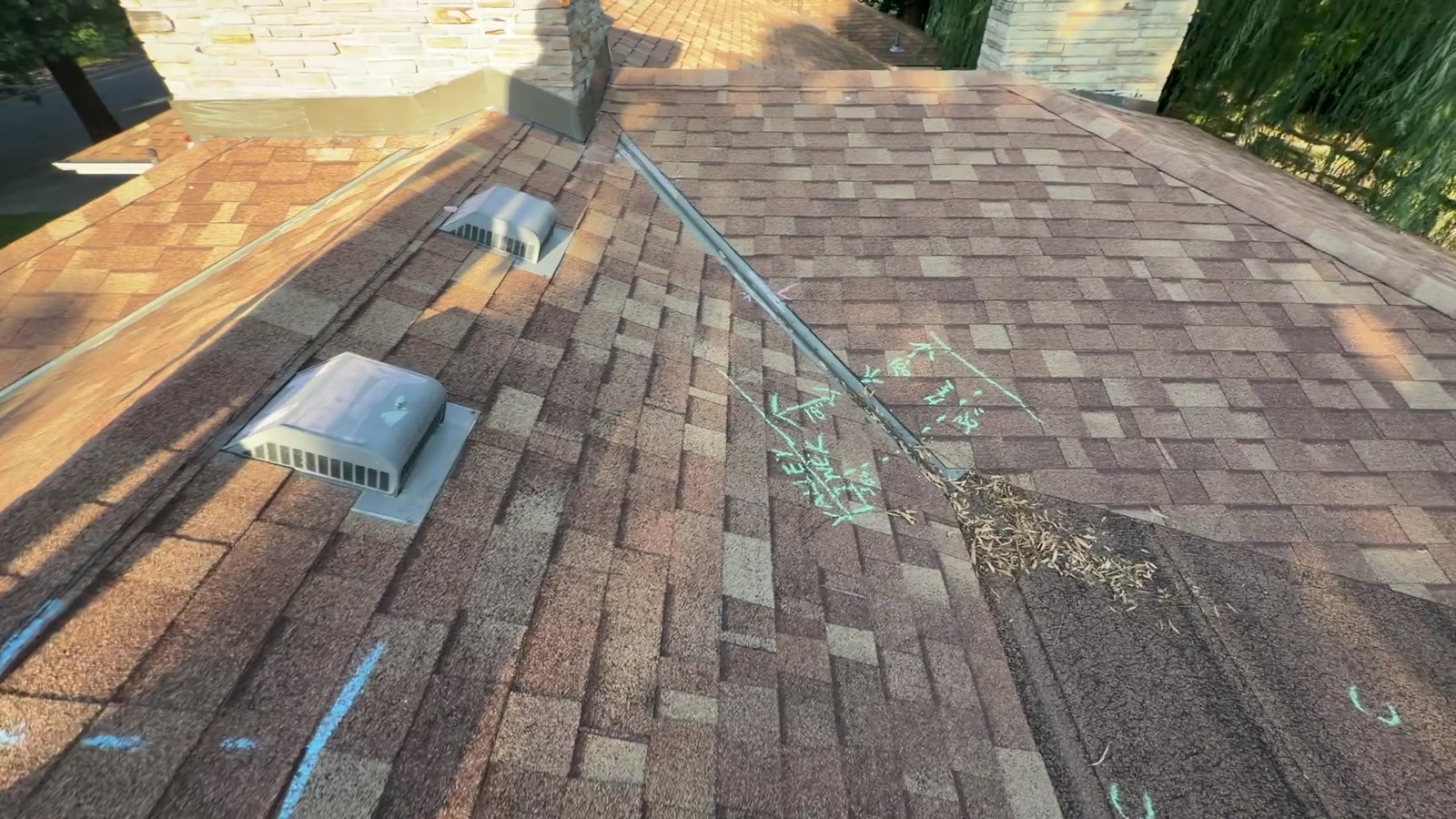
Return to the wider view so the close-up remains tied to a specific roof location.
Wichita inspection · July 31, 2026 · source video V4, 4:55.60 total. Frames from Crown’s existing Video Visual Evidence Index v1.0. These stills document specific points in the original recording; the playable excerpt above shows V4 from 01:00–02:30. Later frames are outside that excerpt.
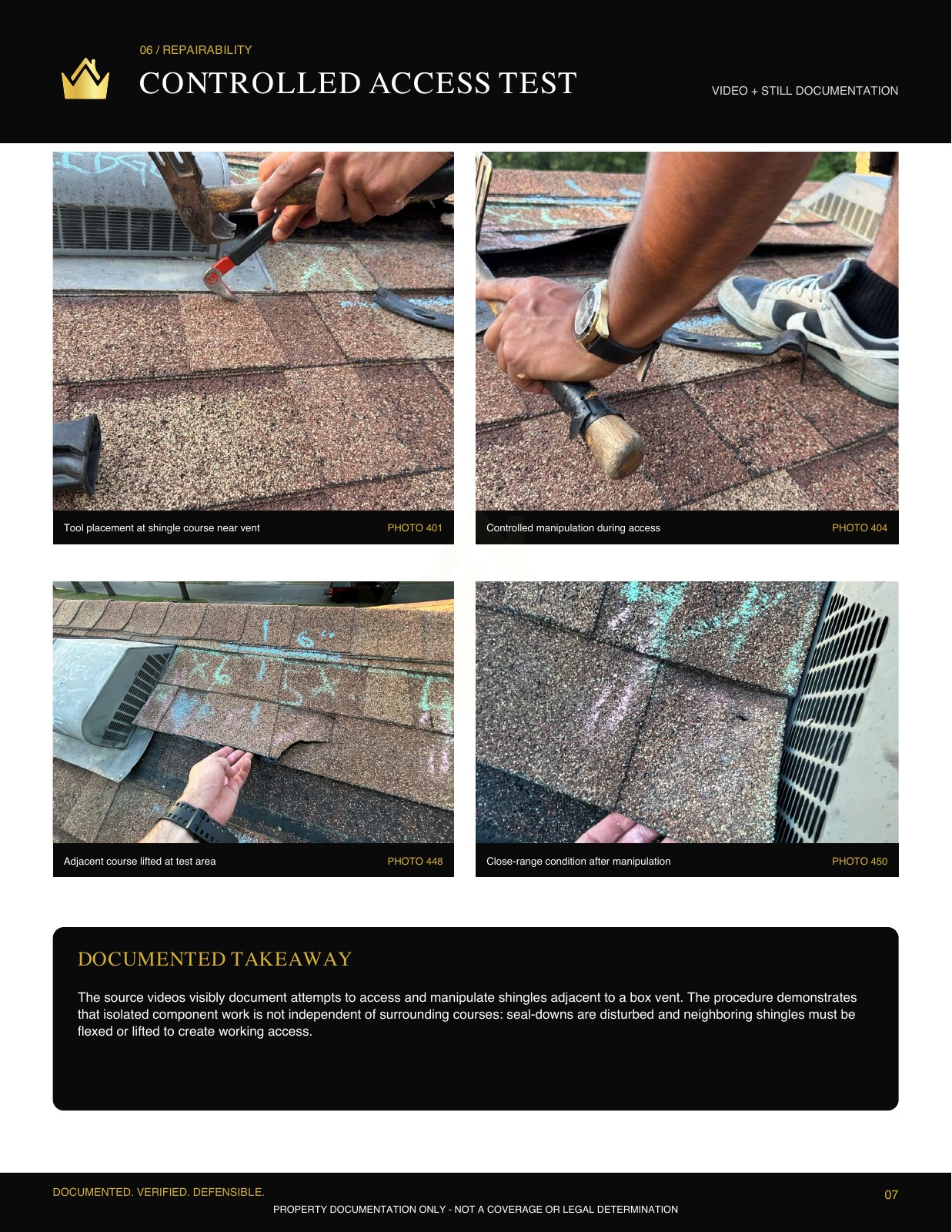
“Isolated component work is not independent of surrounding courses: seal-downs are disturbed and neighboring shingles must be flexed or lifted to create working access.”Current Roof Condition & Repairability Documentation · p. 7Read the actual access-test report page
03 / Trace the interfaces
A roof is assembled in layers. A proposed repair must account for access, overlaps, seals and the condition of every material it disturbs.
 Open full image ↗
Identify the damaged component and the exact access needed.
Record the lifting, unsealing and fastener access required by the assembly.
Check whether the work reaches a valley, hip, flashing or neighboring plane.
Explain which materials can be restored and which additional work the observed condition requires.
Method diagram, not a measured plan of this roof. Extension to another slope—or full replacement—requires case-specific evidence; connectivity alone does not establish that outcome.
04 / Open the source pages
The Kansas City report preserves the test areas and legend. The separate Wichita report records controlled access and adjacent-course disturbance. Read each in its own project context.
 Open full image ↗
 Open full image ↗
Crown / 2027 evidence initiative
Document the damage. Corroborate the timeline.
Support the repair scope.
A compelling claim starts with a documented loss. Connect the conditions on the building to the reported event, the available records and the work needed to restore the affected materials.
The goal: a clear chain from observation to explanation to proposed scope—one that another reviewer can follow.
Build my evidence recordEvidence supports a claim; policy terms and the insurer’s review determine coverage. “2027” identifies this Crown campaign, not a new law or filing deadline.Three questions / three real examples
Kansas City Residential
Event chronology, physical evidence and unresolved questions.
Commercial Property · Clinton
Photographs, observed conditions and priorities for further review.
Kansas City + Wichita examples
Field markings, material access and documented repair tests.
Roof decisions come with questions about cost, coverage and what happens next. Start here.
Talk through your propertyApproval depends on the cause and extent of damage and your policy’s coverage, exclusions and roof settlement terms. A storm nearby does not automatically qualify a roof for replacement. Ordinary wear and tear is generally excluded.
Crown can document visible conditions, photographs, measurements and the construction work recommended. Your insurer decides coverage and payment. Report a suspected loss promptly and ask your insurer about the deadlines and responsibilities in your policy.
See what a condition report includesThere is no single answer for every homeowner. Rates and renewal decisions depend on the insurer, loss history and applicable state rules, including any storm-related protections.
Ask your insurance agent or company how a claim may affect your policy. Your state insurance department can explain consumer protections or review a complaint. Crown cannot promise that a claim will have no effect on your premium or renewal.
Nearby homes can have different damage, roof conditions and insurance coverage. A neighbor’s replacement does not determine the outcome for your roof.
Ask your insurer for its written explanation. Crown can provide dated photographs and construction findings for you to compare with the stated repair scope. A review may identify questions that need clarification; it does not guarantee a different claim decision.
Explore roof repairabilityA useful price starts with your roof’s size, pitch, materials and access, then accounts for decking, flashing, ventilation, removal and installation. Crown confirms the scope and price in a written proposal.
For an insurance-funded project, your deductible may be only part of your expense. Noncovered work, upgrades and depreciation that your policy does not reimburse can add to your cost. Ask about current payment or financing options; availability, approval and terms must be confirmed in writing.
Request a roof estimatePlan to pay the deductible required by your policy. Do not rely on a promise to hide it in an inflated invoice or misstate the amount paid. Project invoices and payment records should accurately reflect the work and actual charges.
If the upfront cost is a concern, ask Crown about current payment options and confirm any financing terms before committing. Financing can spread payments over time; it does not remove your deductible obligation.
Discuss payment optionsCoverage decisions belong to your insurer. For independent guidance, see the NAIC guide to coverage and out-of-pocket costs or find your state insurance department.
Ask Crown to review the proposed work, the roof materials and the field testing needed. We confirm the scope, any fee and scheduling before work begins.
This request does not confirm an appointment or purchase.
Tell Crown about your property and choose an email reply or personal phone call.
Request my repairability assessmentPrefer to talk? Call 660-333-7386 or email Crown.
Text Crown about this property ↗
Copy a ready-to-use message or open your messaging app. For urgent scheduling, please call.
See what to preserve, how Crown connects the evidence and why a dated baseline matters before your next roof decision.
Explore Evidence IntakeCrown Expertise & Training
Explore the training, source research and field documentation that turn roof observations into a reviewable construction report.
Material Identification / The Investigation Record
Material measurements belong in the evidence record. These photographs show a metal-gauge check and a shingle-thickness check during investigation.
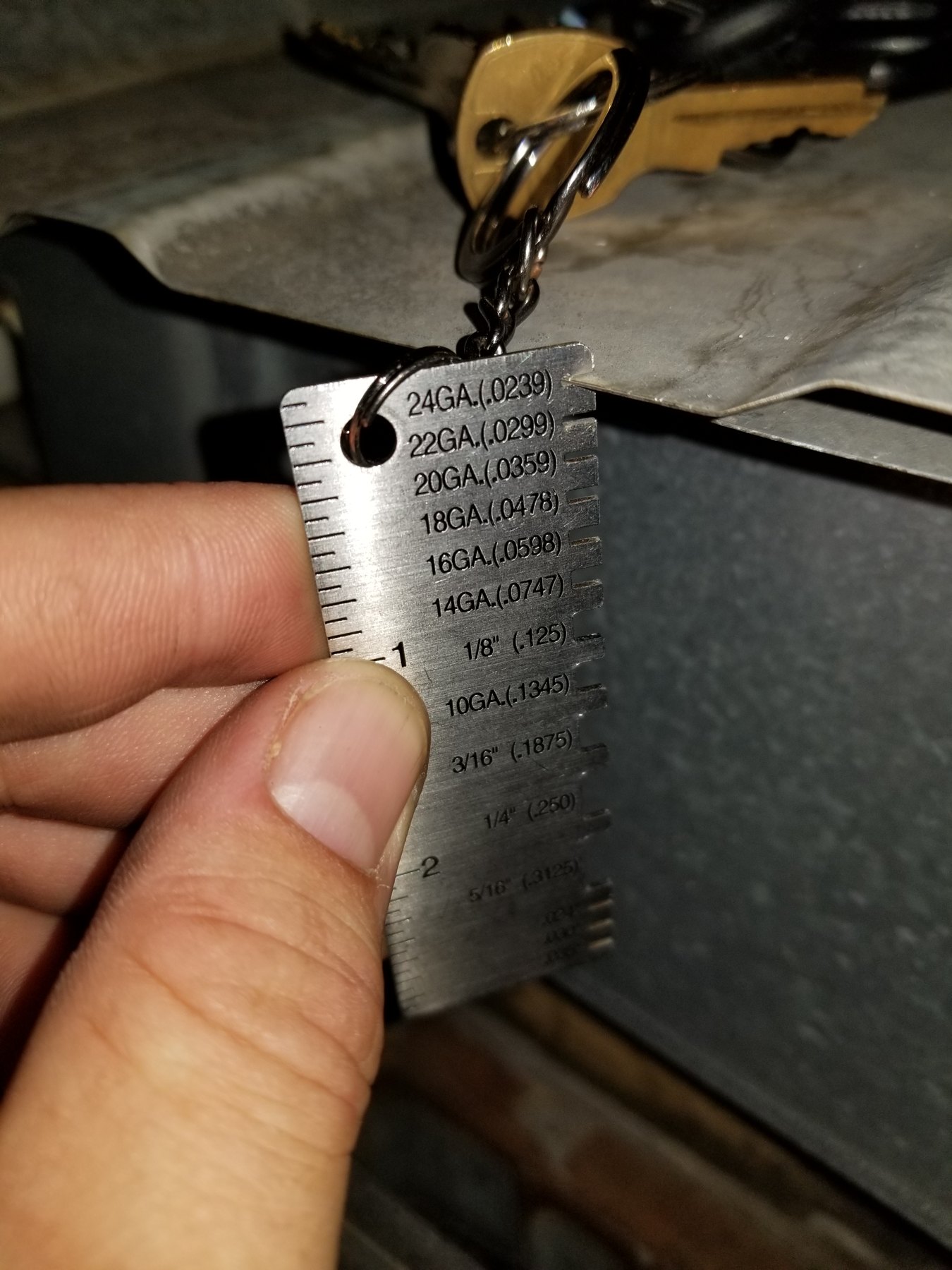 Open The Measurement Photograph ↗
Checking metal-panel thickness during material identification.
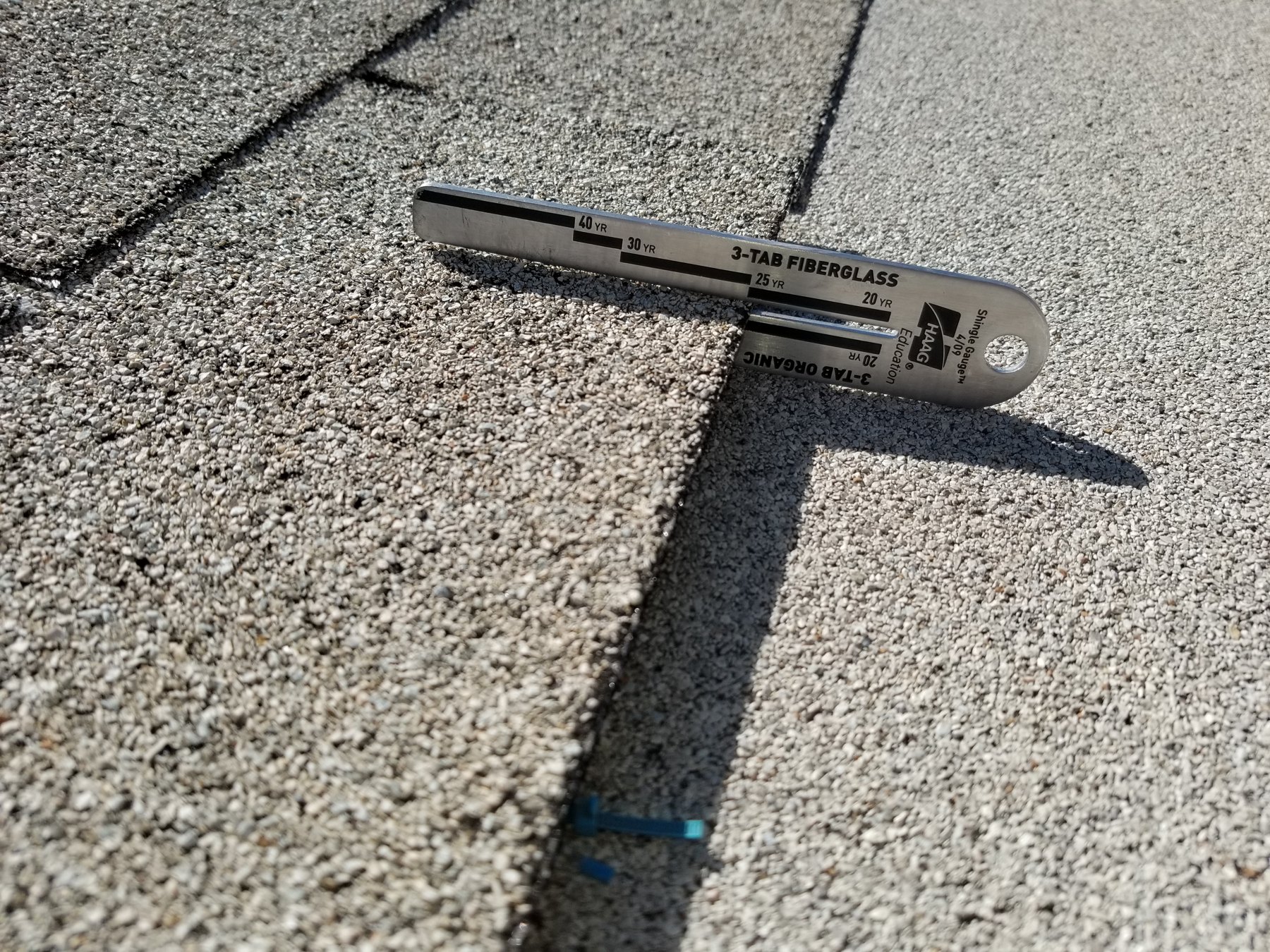 Open The Measurement Photograph ↗
Checking shingle thickness during the roof investigation.
The photographs illustrate the measurement process. A material identification or repair recommendation depends on the field record, product information, and the conditions of the property being reviewed.
Field Evidence / Follow The Markings
Follow a separate roof-access demonstration from the marked area to the flashing, tool placement, and adjoining shingle courses. These frames preserve the sequence of the original field recording.
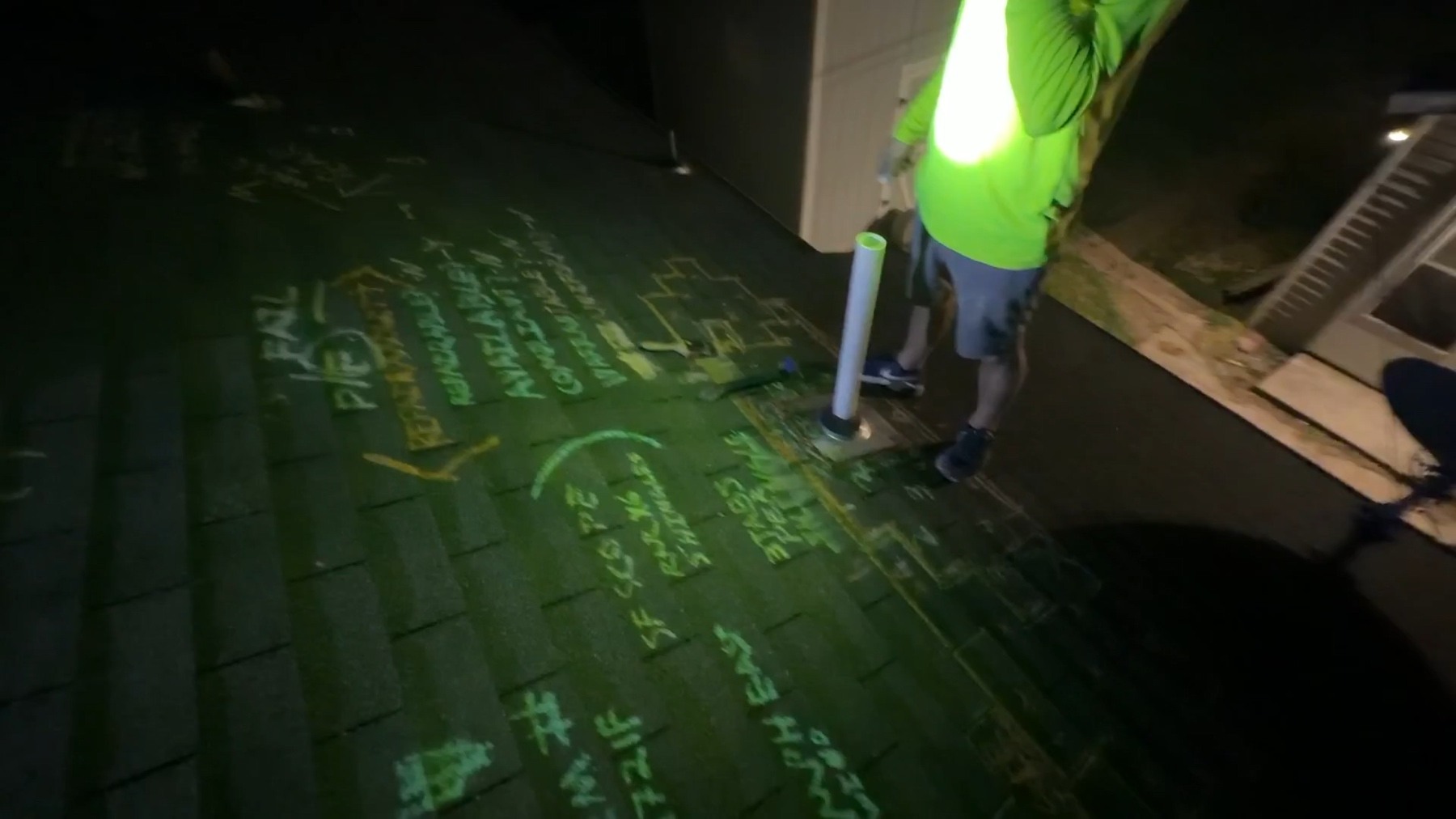 01 / 00:00.00Open Field Frame ↗
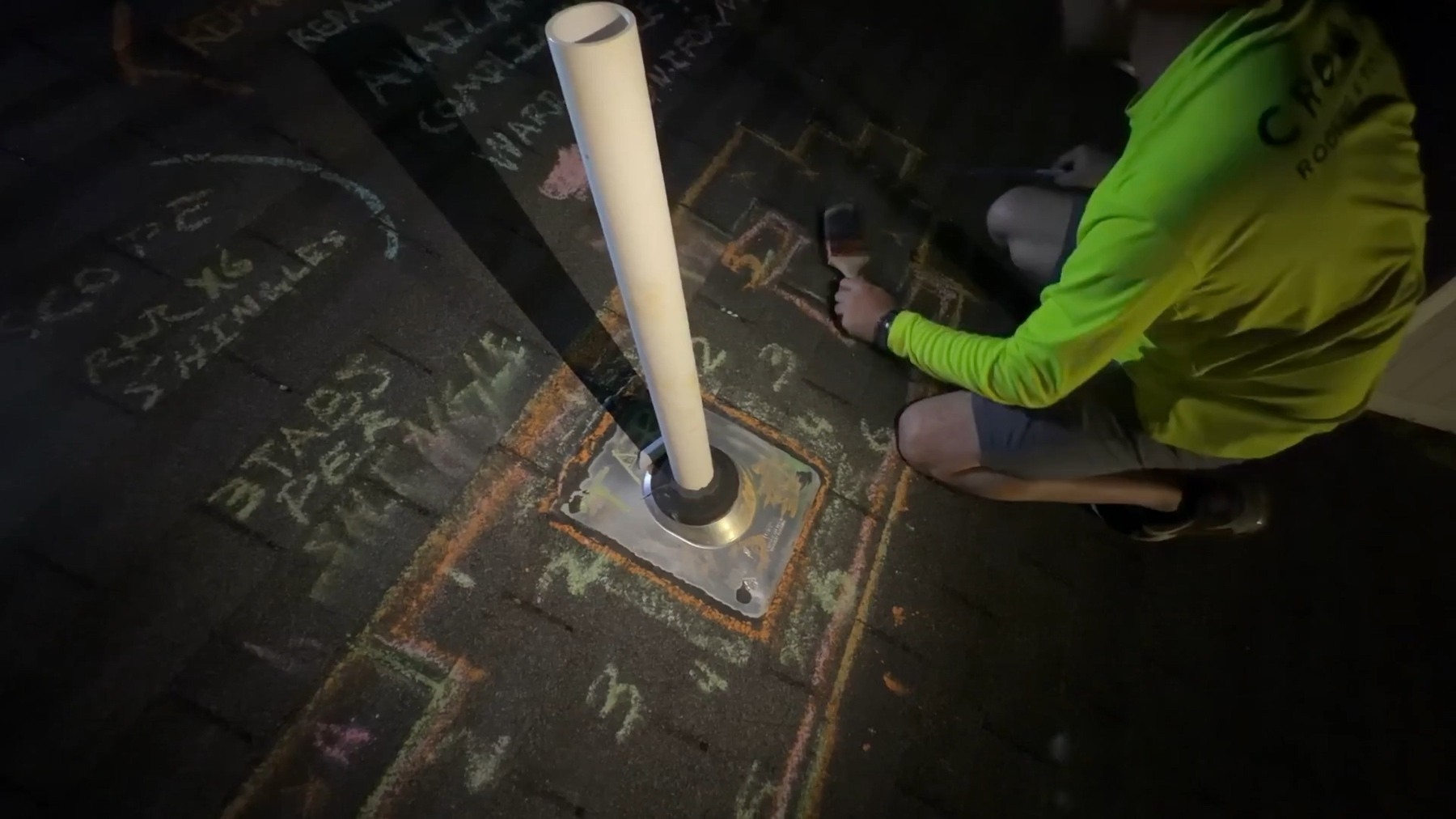 02 / 01:44.94Open Field Frame ↗
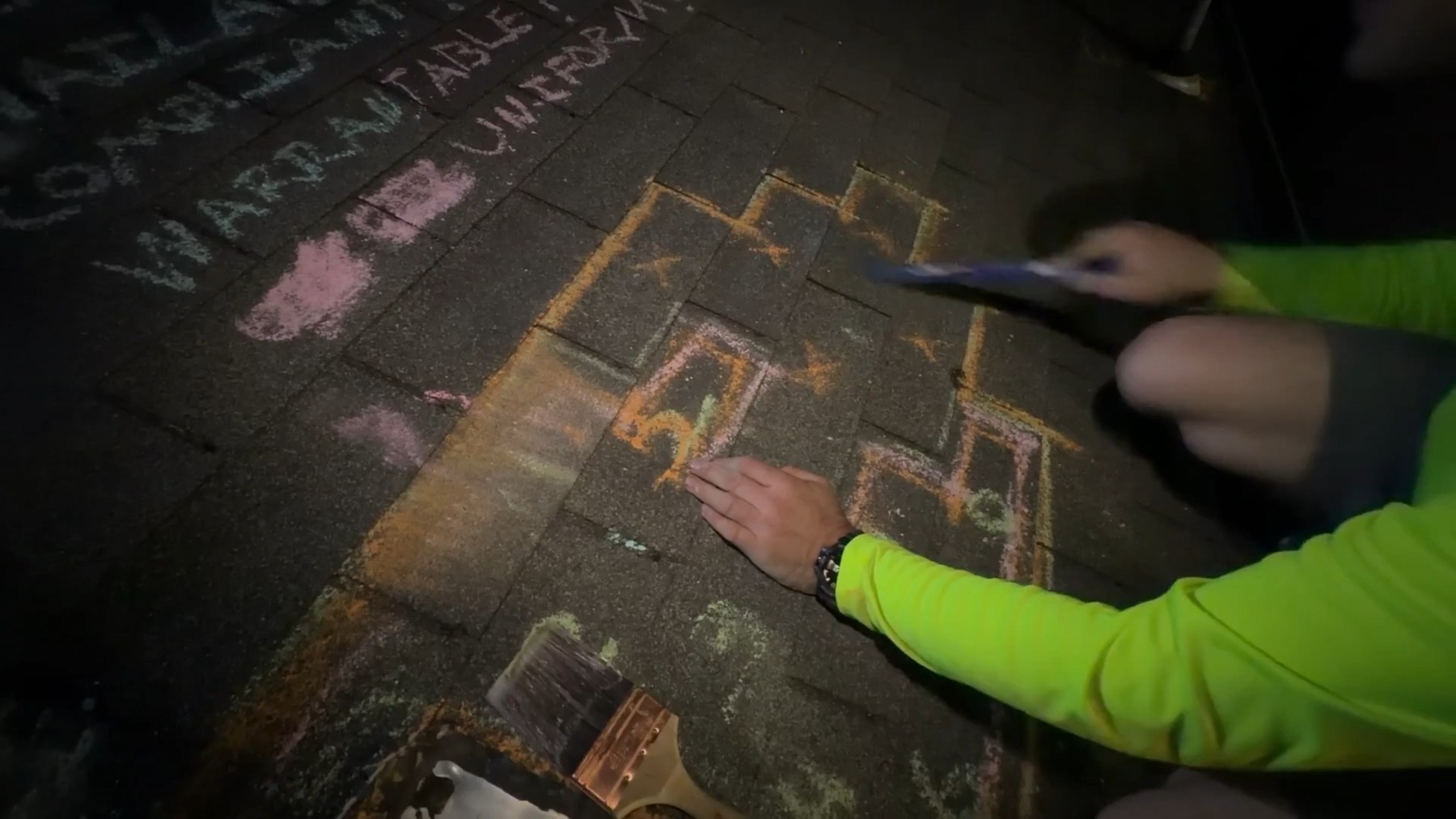 03 / 02:54.94Open Field Frame ↗
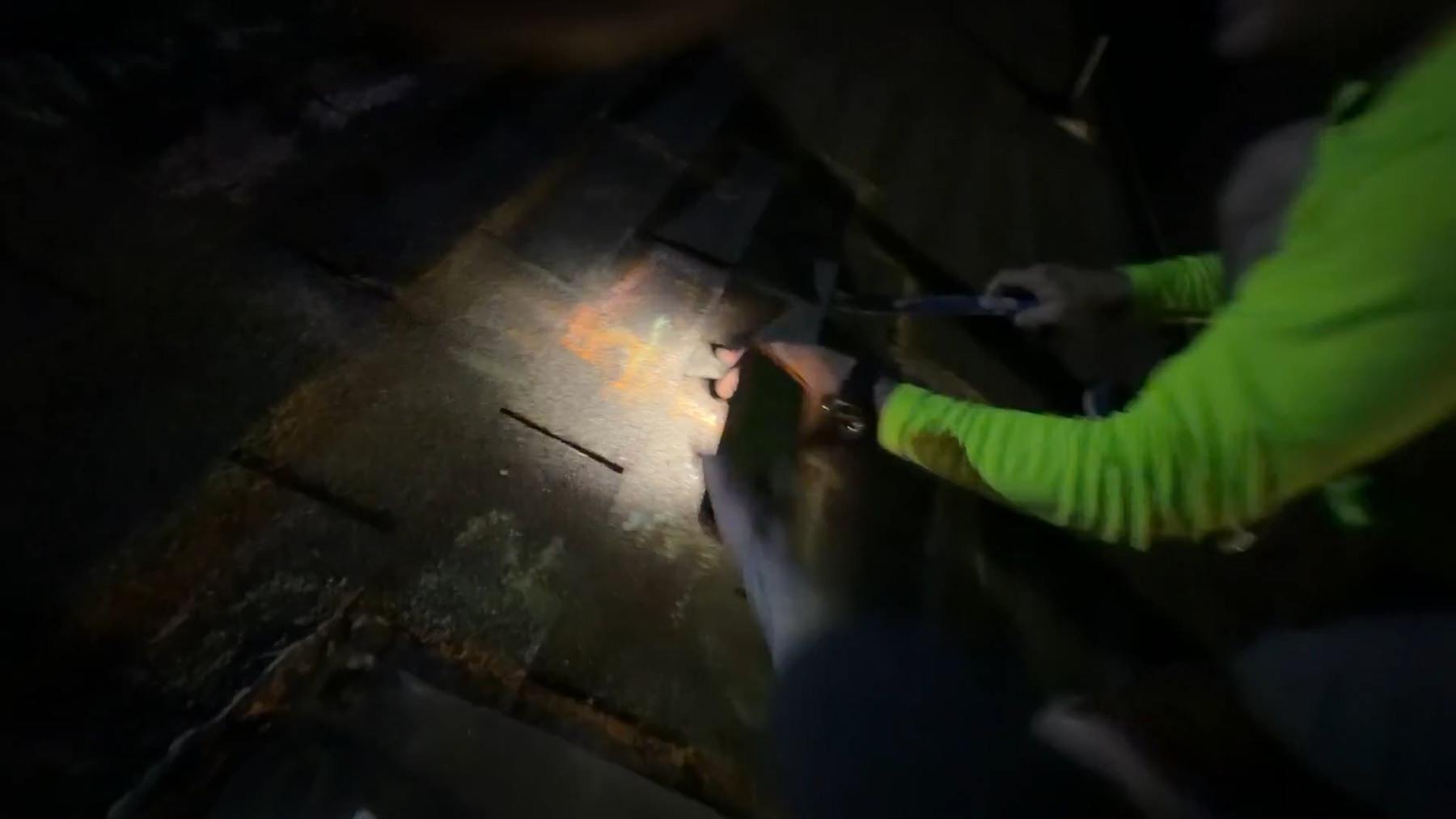 04 / 03:24.95Open Field Frame ↗
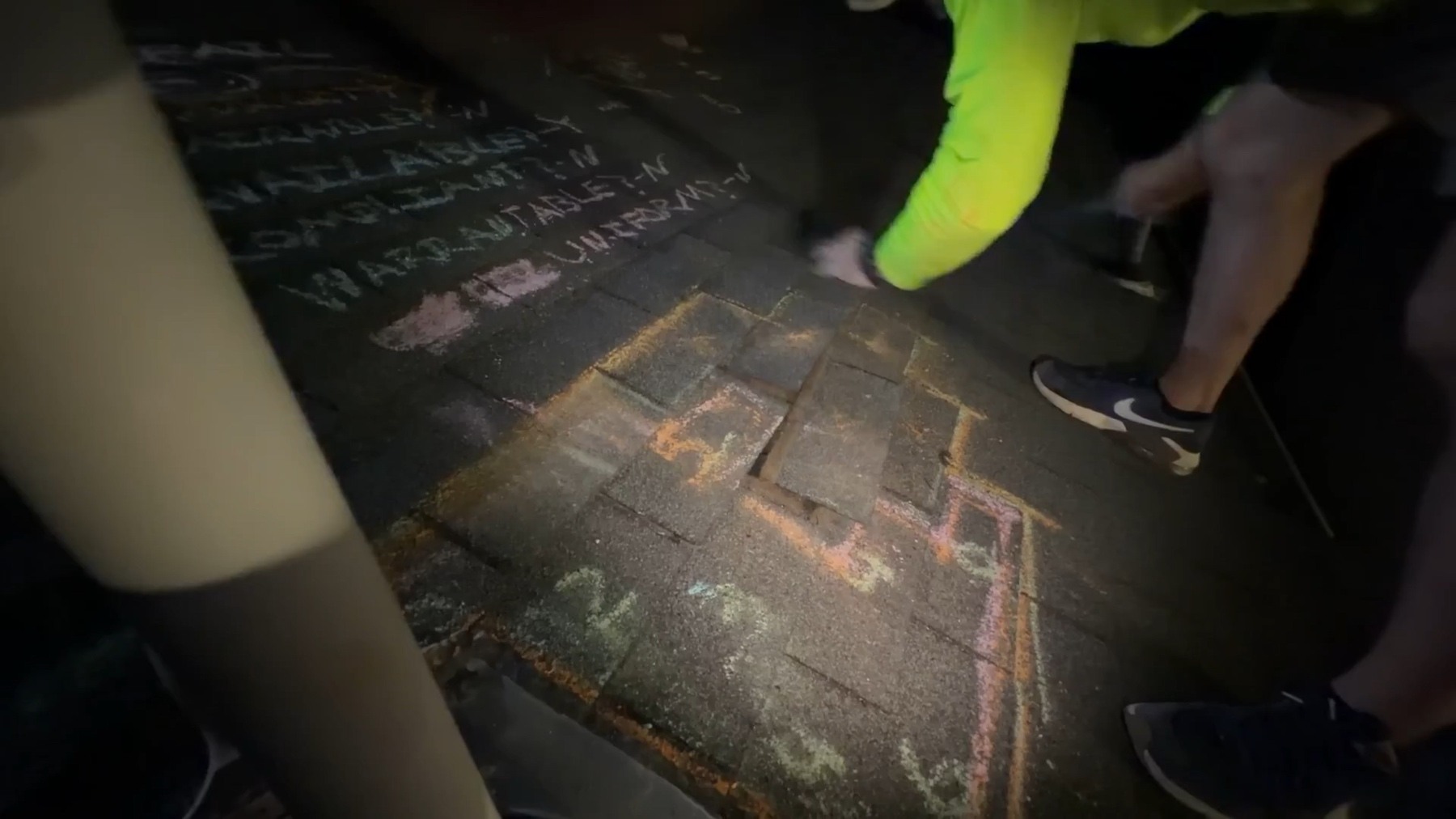 05 / 04:24.94Open Field Frame ↗
This active project record follows the repairability investigation as a full-roof replacement scope develops. The field evidence is available now; the case study will grow as project milestones are documented.
Separate Repair-Access Evidence Record
Review sixteen timestamped stills across four source videos. The index preserves the observed procedure and its source references, including the controlled-access sequence.
Read The Visual Evidence Index · PDF ↗01 / Field RecordPhotographs, annotations, source timestamps, and the observed access procedure.
02 / Scope DevelopmentConnect the repair question with the materials and construction work involved.
03 / Case StudyAdd the project’s documented milestones and completed work as they become available.
Explore Figure home equity through Improvifi, or compare personal-loan offers.
Your Questions. Time With Crown.
Talk through your roof, report findings, repair questions or proposal. Choose a video meeting or an in-person review.
 Explore Project Protection ↗Eligible, registered projects. Written terms apply.
Send your property or report request before the meeting so Crown can prepare. Check the calendar’s time zone. Crown confirms the location for in-person reviews. Booking a review does not schedule inspection or installation work. Privacy